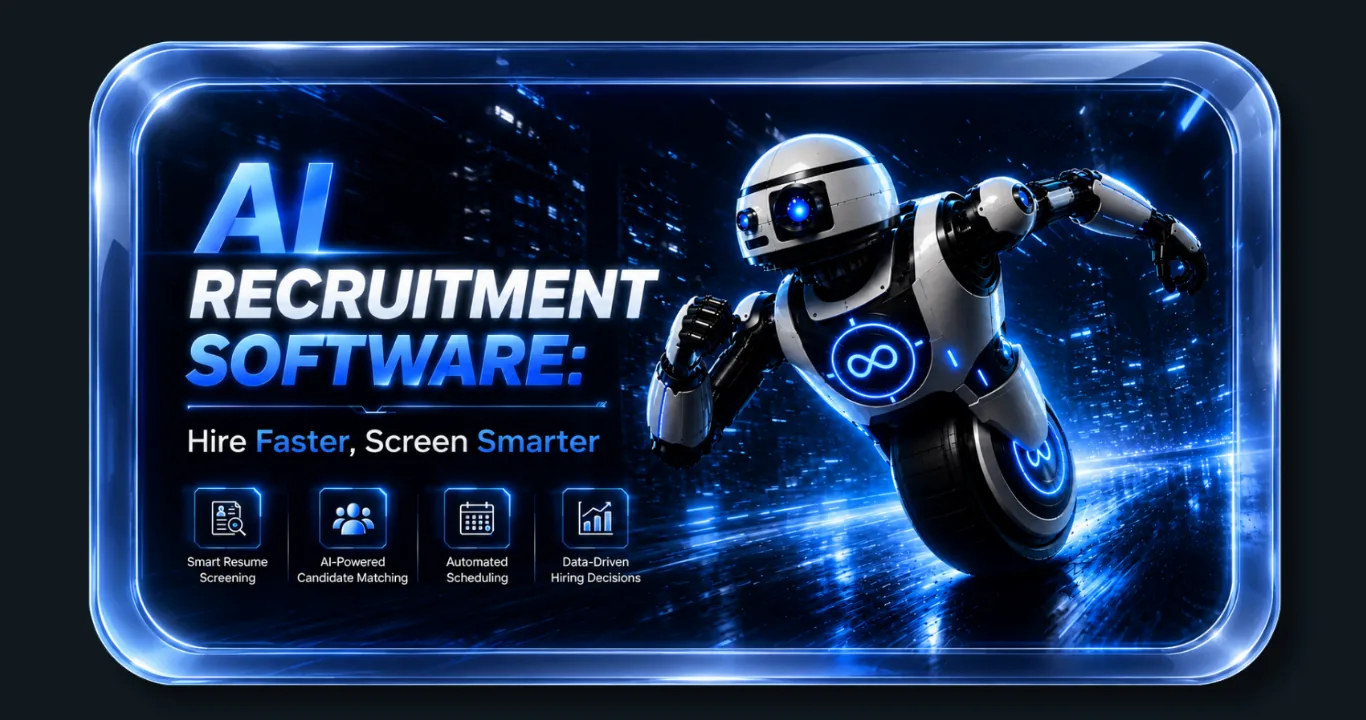
AI Recruitment Software: How It Speeds Up Hiring
Learn how AI recruitment software automates candidate screening, speeds up hiring and helps teams find the right talent faster.
Hiring usually means the same repetitive steps on every opening: sorting through dozens or hundreds of resumes, checking each one against the job requirements and scheduling interviews with the candidates who look like a fit.
Doing that by hand for every role takes time and it's easy for a strong resume to get missed simply because a recruiter is working through a large stack under time pressure.
AI recruitment software is built to handle the sorting and screening part faster. In this guide, you'll learn what it actually does, where it helps most, and where it can go wrong if you rely on it too heavily.
What Is AI Recruitment Software?
AI recruitment software screens and ranks job applications based on how well they match the role, instead of a recruiter manually reading every resume in a stack.
That includes:
- Screening resumes against job requirements automatically
- Ranking candidates based on relevant experience and skills
- Scheduling interviews without back-and-forth emails
- Flagging strong candidates who might otherwise be missed in a large pool
- Reducing repetitive manual review of applications
In simple terms, it narrows a large pool of applicants down to a manageable shortlist faster than doing it by hand, so recruiters spend their time on candidates worth talking to.
Why Businesses Are Adopting AI Recruitment Software
A recruiter manually reviewing hundreds of applications for a single role can’t give every resume the same level of attention, and strong candidates can get missed simply due to volume.
AI recruitment software helps by:
- Screening large applicant pools faster than manual review
- Reducing the risk of a strong resume being overlooked due to volume
- Cutting down time spent on repetitive scheduling and follow-up
- Giving recruiters a ranked shortlist to start from
- Freeing up time for actual candidate conversations
The businesses that adopt this aren’t just hiring faster. They’re making sure volume doesn’t mean qualified candidates slip through the cracks.
How AI Recruitment Software Actually Works
At a basic level, AI recruitment software compares each application against the criteria defined for the role.
It reads resumes and applications, extracts relevant experience, skills and ranks candidates based on how closely they match what’s been specified. It can also automate parts of the process that follow, like sending interview invitations or follow-up communications. The output is a ranked shortlist, not a hiring decision, the software surfaces candidates worth a closer look, but it doesn’t decide who gets the job.
That distinction matters. The software is designed to narrow the pool faster, not to replace the judgment involved in actually evaluating a person for the role.
Real Business Examples
1. Retail Chain
A retail chain hires for multiple store locations at once, often needing to fill several similar roles quickly during peak seasons.
After implementing AI recruitment software:
- Applications screened and ranked automatically across locations
- Interview scheduling handled without manual back-and-forth
- Qualified candidates surfaced faster during high-volume hiring periods
Result:
- Faster time to fill seasonal and store-level roles
- Less recruiter time spent on manual resume review
- More consistent screening criteria across locations

2. Hospitality Group
A hospitality group manages hiring for multiple properties, often needing to fill a wide range of roles from front desk to housekeeping to management.
After implementing AI recruitment software:
- Applications ranked by role-specific requirements automatically
- Candidate communication and scheduling automated
- Recruiters focus on interviews rather than initial screening
Result:
- Faster turnaround on high-turnover roles
- Less manual coordination across properties
- More time for recruiters to focus on candidate experience
3. Tech Startup
A tech startup competes for a smaller pool of specialized candidates, where the speed of the initial response often matters as much as the screening itself.
After implementing AI recruitment software:
- Applications screened against technical requirements automatically
- Strong candidates flagged and contacted faster
- Less time spent manually sorting through applications
Result:
- Faster response time to competitive candidates
- Less risk of losing candidates to slower-moving competitors
- More recruiter time spent on interviews and closing offers
Where AI Recruitment Software Still Needs a Person
It’s worth being direct about this. AI recruitment software is good at narrowing a large pool quickly, it isn’t good at evaluating the things that actually determine whether someone will succeed in a role.
Screening tools can only judge what’s written on a resume, they can’t assess communication skills, team fit or the kind of judgment that only comes through in an interview. There’s also a well-documented risk that automated screening can inherit bias from the data or criteria it’s trained on, which is why the ranked shortlist should be a starting point for review, not an automatic filter that removes candidates without a person checking the results. Final hiring decisions, especially for roles involving judgment, leadership or client interaction, still need a person’s evaluation.
The realistic value is speeding up the sorting so recruiters can spend their time on the evaluation that actually determines a good hire.
What Affects AI Recruitment Software Results
1. Quality of Job Criteria: The software can only rank candidates against the criteria you give it. Vague or poorly defined requirements produce a less useful shortlist.
2. Diversity of the Applicant Pool: Screening criteria should be reviewed periodically to check they aren’t inadvertently narrowing the pool in ways that don’t reflect actual job requirements.
3. Recruiter Review of Shortlists: The software surfaces candidates, it doesn’t replace review. Shortlists that go straight to interview without a recruiter checking them lose the benefit of human judgment.
4. Integration With Existing Hiring Process: These tools work best layered into a hiring workflow your team already follows, not as a disconnected extra step.
5. Ongoing Criteria Updates: Job requirements change. Screening criteria that aren’t updated will keep ranking candidates against outdated expectations.
Common AI Recruitment Software Mistakes
1. Letting the Software Make the Final Call: Don’t let automated rankings remove candidates without a person reviewing the decision. The software should narrow the pool, not make the hire.
2. Using Vague Screening Criteria: Don’t set criteria that are too broad or too narrow. Poorly defined requirements produce a shortlist that doesn’t actually reflect who’s qualified.
3. Not Reviewing for Bias; Don’t assume the screening criteria are neutral by default. Periodically reviewing outcomes helps catch unintended patterns before they affect who gets considered.
4. Skipping the Human Interview Process: Don’t treat a high ranking as a substitute for a real conversation. The interview is still where fit and judgment actually get assessed.
Why Businesses Should Use AI Recruitment Software
A recruiting team manually screening every application for high-volume roles is spending time on repetitive sorting that could go toward actual candidate conversations.
Businesses using AI recruitment software screen applicants faster, reduce the risk of strong candidates being missed due to volume, and free recruiters to spend their time where it matters most, evaluating and engaging with the people who could actually do the job well.
It’s not about removing recruiters from the hiring process. It’s about making sure their time goes toward judgment calls, not manual sorting.
Need Help Choosing the Right Recruitment Setup?
Choosing AI recruitment software that actually fits your hiring needs takes more than picking the most popular tool. It requires understanding your hiring volume, your role requirements, and where bias could creep into automated screening if it isn’t reviewed.
At Ailgorith, we help businesses evaluate their hiring workflows and implement recruitment tools that speed up screening without removing the human judgment that hiring decisions need.
Contact Ailgorith to find out which recruitment setup would actually fit how your team hires.
Conclusion: Speed Up the Sorting, Not the Judgment
AI recruitment software isn’t about replacing the people making hiring decisions. It’s about making sure a strong candidate doesn’t get lost in a stack of applications simply because of volume.
Businesses that use these tools well don’t skip the human evaluation that hiring actually depends on. They use automation to get to that evaluation faster.
AI Recruitment Software: Frequently Asked Questions
No. It screens and ranks candidates to narrow the pool, but the interview and final hiring decision should always involve human judgment.
No, and it can actually introduce bias if screening criteria aren't reviewed. It requires ongoing oversight to check that outcomes reflect fair, job-relevant criteria.
Most businesses see faster screening within the first few hiring cycles, though the ranking quality improves as criteria are refined based on actual outcomes.
It delivers the most obvious time savings at high volume, but even smaller hiring needs can benefit from faster initial screening.
Transparency practices vary by jurisdiction and company policy, so it's worth checking applicable regulations and being clear with candidates about how their application is reviewed.